In an earlier blog post I talked about the quilt I made using Zak Foster’s “Destroy this Quilt” creative challenge that ran through 2024 in the online quilting community The Quilty Nook. In 2025 we were encouraged to revisit the prompts to see what the experience would be like the second time around, when one had some idea what to expect.
For Oxbow I revisited roughly half of the challenge prompts. It started as a conscious reflection on the movement of winding rivers and the way they form oxbows as they wend their way across the prairie. I was thinking of an oxbow as a representation of the way water adapts its path to the terrain, and in doing so also further entrenches the features of that terrain. On the technical front, I set out to challenge myself to allow raw and fraying edges to be part of the finished quilt. That, in a nutshell was the whole plan. But then it got away on me!
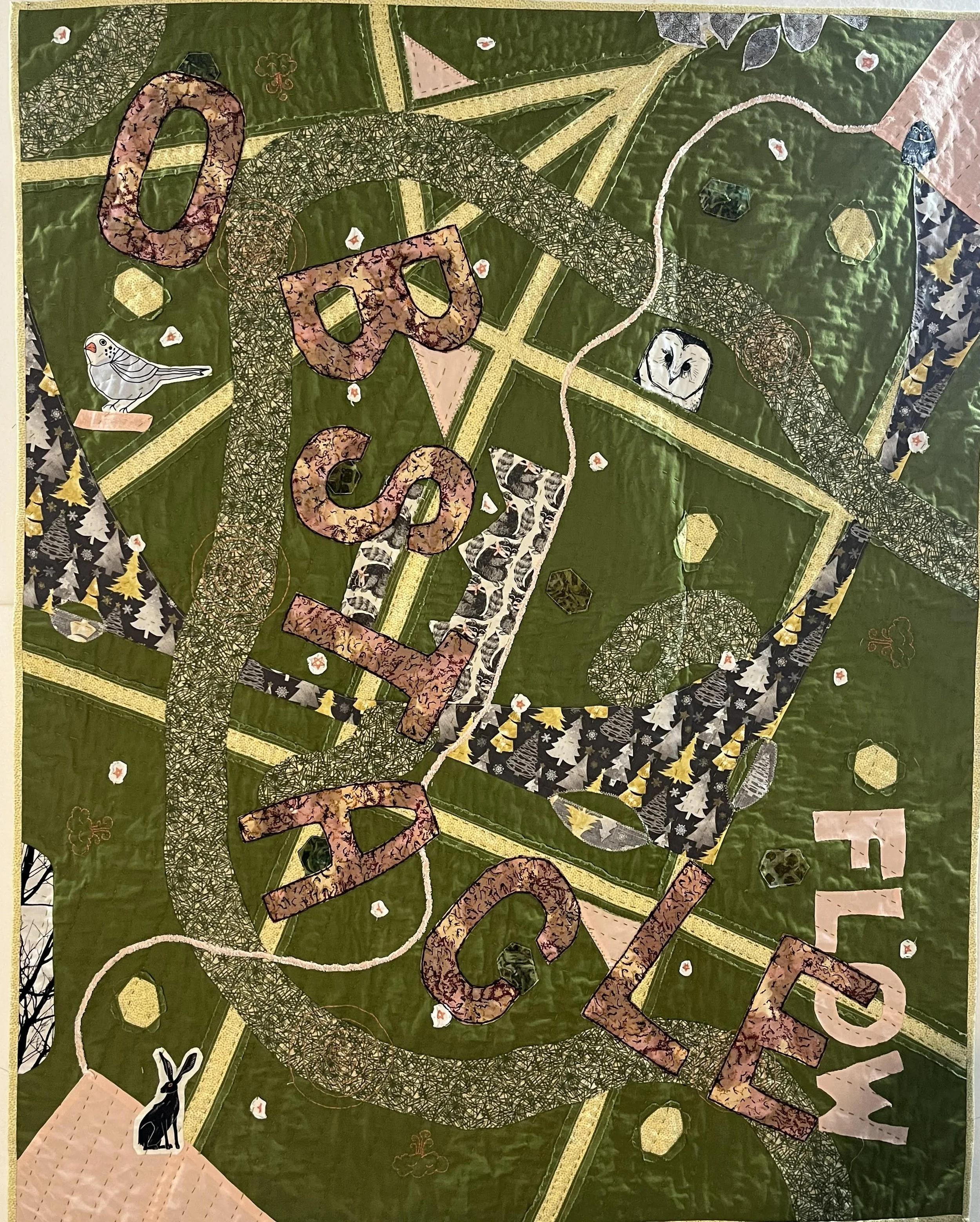
Somewhere along the journey of making this quilt it evolved into a completely different reflection on the creative process itself. I kept trying to centre attention on obstacles – both the obstacles that divert the direction of a river and the obstacles that block creativity. I even made a late-in-the-game decision to slap the word “obstacle” in big block letters that obscured the whole picture. But when I stepped back from the finished piece, I was startled to realize that, because of the colour values of the fabric I had used for both sets of letters, the smaller word “flow” drew focus away from the larger “obstacle.”
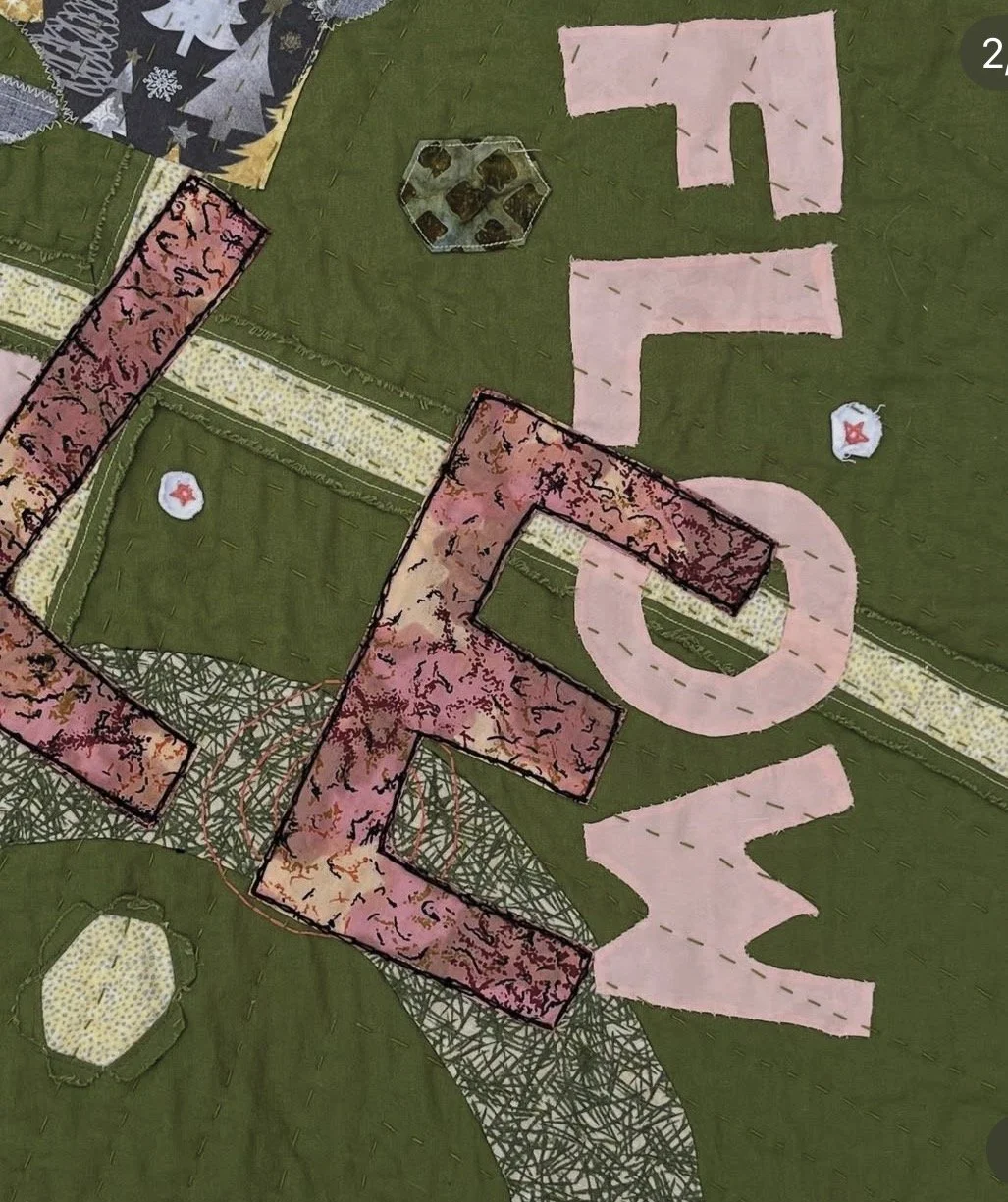
I realized that, in spite of my attempt to showcase obstacles, it was the positive experience of creative flow that became the story this quilt wanted to tell.
And then, just the other day, I encountered a mind-blowing bit of historical data.
If you have done any studying about the history of quilting, you will most certainly have come across the quilters of Gee’s Bend. In Gee’s Bend, an isolated African-American community on the Alabama River, generations of quilt-makers have created vibrant, improvisational quilts that are considered a significant chapter in the history of textile art worldwide. I knew all this. But what I didn’t know was where the town that spawned all this creativity got its name. The Gee comes from Joseph Gee – the plantation owner who enslaved the people from whom the inhabitants of Gee’s Bend are descended. And the bend? It’s a deep bend in the river that hemmed in the community on three sides, insulating it from connection with much of the world beyond.
The “bend” in Gee’s Bend is an oxbow. (cue sound of Anna’s head exploding.)
This got me thinking back to my original concept for this quilt. I think at first I was thinking of the oxbow as the path the river travels, but on further consideration I think the oxbow is actually the river itself. It’s the water, and the way that water adapts to its constraints. I have long believed that constraints actually help creativity. I am personally at my most creative when I am trying to solve a problem, and so typically when I set out to design a new quilt, I give myself some parameters to work within, or in the case of a commission, I take those parameters from someone else. Either way, it is the obstacles that give shape to the creative flow.
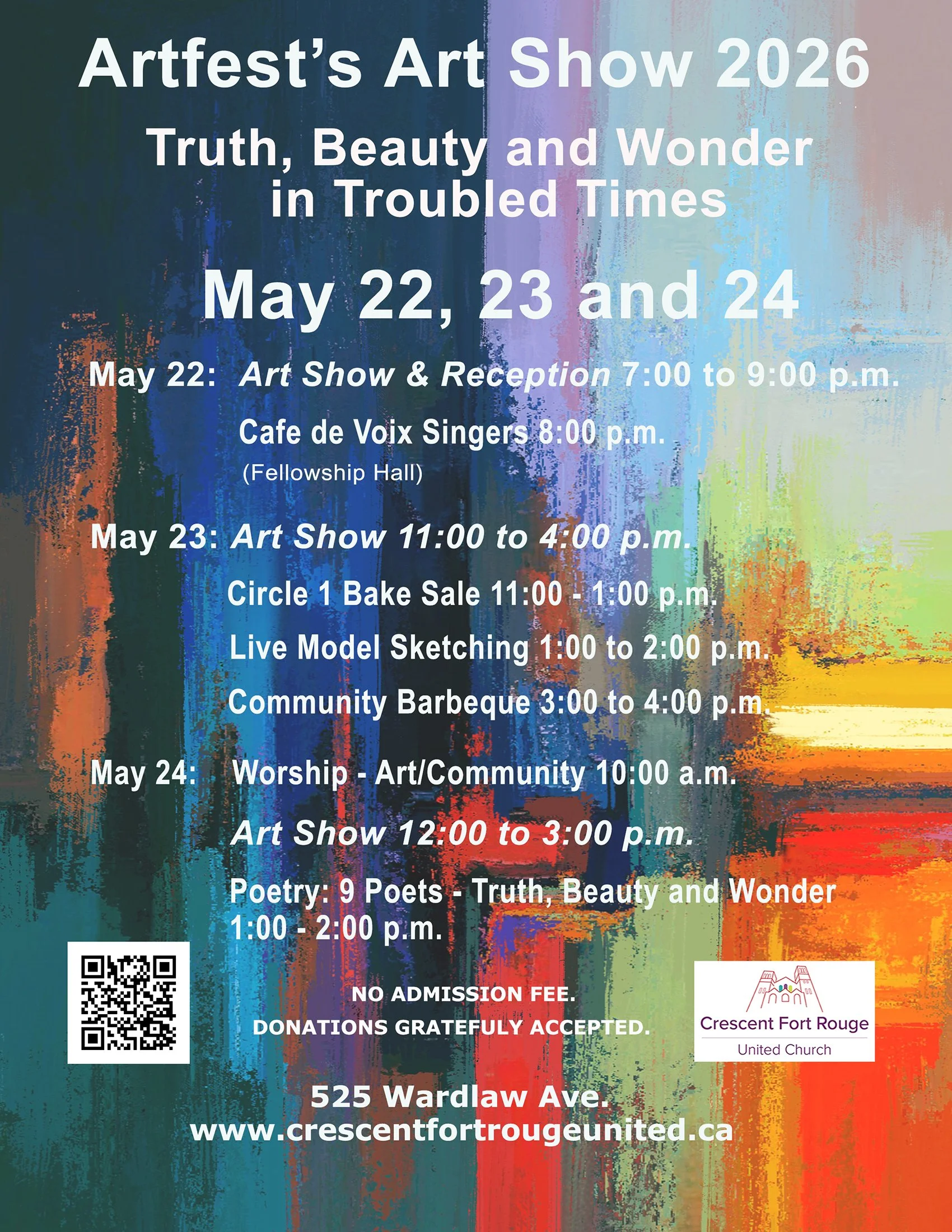
Oxbow will be on display the weekend of May 22-24, 2026 at the annual Artfest at Crescent Fort Rouge United Church., 525 Wardlaw, Winnipeg.